Emergency Fund vs. Credit Card Buffer: Which Should You Build First?
The furnace dies in January. The car needs a transmission. Your hours get cut without warning. In that moment you have two ways to pay: the available credit on a card, or the money sitting in a savings account. Most advice says build savings first, and that is usually right — but the reason matters more than the rule.
Credit and cash solve different problems, and one of them quietly gets more expensive the longer you lean on it.
What Available Credit Really Is
A card limit is not a reserve. It is a standing offer to lend you money, and the lender can change that offer with very little warning. Issuers reduce limits or close accounts when your credit profile shifts, when you miss a payment elsewhere, or when they tighten up across the board. If your emergency plan depends on $5,000 of available credit, that plan has a landlord you never chose.
The second catch: credit only helps while it is unused. Once you have spent the limit, the protection is gone and the repayment begins. Interest on a revolving balance builds every month, so a $900 repair can quietly become $1,100, then more, if you only make minimum payments.
And not every emergency takes a card. Landlords, some contractors, mortgage servicers, certain insurance premiums and plenty of local trades want cash, a check or a bank transfer. A credit line does nothing for the expense that does not accept it.
What Cash Does That Credit Can't
Cash has three properties that matter in a crisis.
It does not require approval. No issuer is deciding in real time whether you are still worth lending to.
It has no due date. A card gives you a few weeks before the statement balance is due, and then it starts charging you. Savings gives you forever.
It covers lost income. This is the big one. If you lose a job or your shifts dry up, a credit limit does not replace a paycheck — it delays the reckoning while interest runs in the background. Cash buys the thing you actually need then: time to find work and cut costs without panic.
You cannot pay rent with a limit. You can pay it with money.
The Trap of Using Credit First
The damage from a credit-card-first buffer is not just interest. It is the loop.
Say you cover a $1,200 car repair on a card because you have no savings. Now you have a monthly payment you never planned for, and it competes with the money you meant to save. So the next emergency — a dental bill, a dead laptop, a flight home — goes on the card too. Two years later there is a balance you cannot quite clear, no savings, and a smaller buffer because part of your limit is occupied by old debt.
There is a quieter cost as well. Once you are carrying a balance, saving feels pointless: the interest you pay is larger than the interest you earn. People stop transferring money to savings, and that habit is harder to rebuild than the balance.
Where a Card Genuinely Helps
None of this makes a credit card useless. It is a strong second line of defense, and in a few ways it beats cash.
- Float. If you pay in full, you get several weeks before the money leaves your account — a bridge between the emergency and your next paycheck.
- Reach. A card can cover a $3,000 expense when you have $600 saved. Cash cannot.
- Protection. Disputed charges, fraud protection on some cards, and no risk of losing actual cash to a pickpocket.
- Records. Itemized statements are genuinely useful when you file an insurance claim.
The point is the order: card as backup, not as plan. A card you pay in full every month is an asset. A card you are depending on is a liability with a limit.
A Practical Order of Operations
- Build a starter buffer of $500 to $1,000 in a separate savings account. Not your checking account, and ideally not even at your everyday bank — the transfer delay works in your favour.
- Keep every card open and paid in full. Turn on autopay for the statement balance so a forgotten due date never costs you a limit or a fee.
- If you carry high-interest debt, split your attention: hold the buffer at $1,000, then send everything extra to the highest-rate balance.
- Once the debt is gone, grow the buffer to three to six months of essential expenses — rent, food, utilities, insurance, transport. Not your full salary.
- Add sinking funds for costs you can predict: car maintenance, annual insurance, holidays, deductibles.
- Then invest for the long term.
How to Find Your First $1,000
Small, boring moves beat one heroic month.
- Automate a transfer the day after payday. Twenty dollars is a real start. Raise it whenever a bill disappears or your income rises.
- Bank windfalls instead of absorbing them: tax refunds, bonuses, rebates, cash gifts.
- Pause one recurring cost for 90 days — a subscription you barely use, a gym you never visit, a delivery habit — and redirect the exact amount.
- Sell the obvious things: old phone, unused bike, furniture in the garage.
- Shift a bill due date to line up with payday if you can. That alone prevents the panic week that eats savings.
- Keep the account invisible. No debit card attached, no app on your home screen.
Build Cash First, Let the Card Be the Backup
Cash first, most of the time. A $1,000 cushion plus an open, paid-in-full card is far sturdier than either one alone: the cash absorbs the hit, and the card handles whatever the cash cannot. The reason to save before you lean on credit is not that credit is bad. It is that a card gets more expensive the longer you need it, while a savings balance gets more useful.
Start the transfer this week, even if it is small. And if your balances are already large enough that minimum payments are eating your budget, talk to a nonprofit credit counsellor or a fee-only financial planner before signing up for any consolidation or debt-relief programme — check that the service is accredited and does not charge large upfront fees.
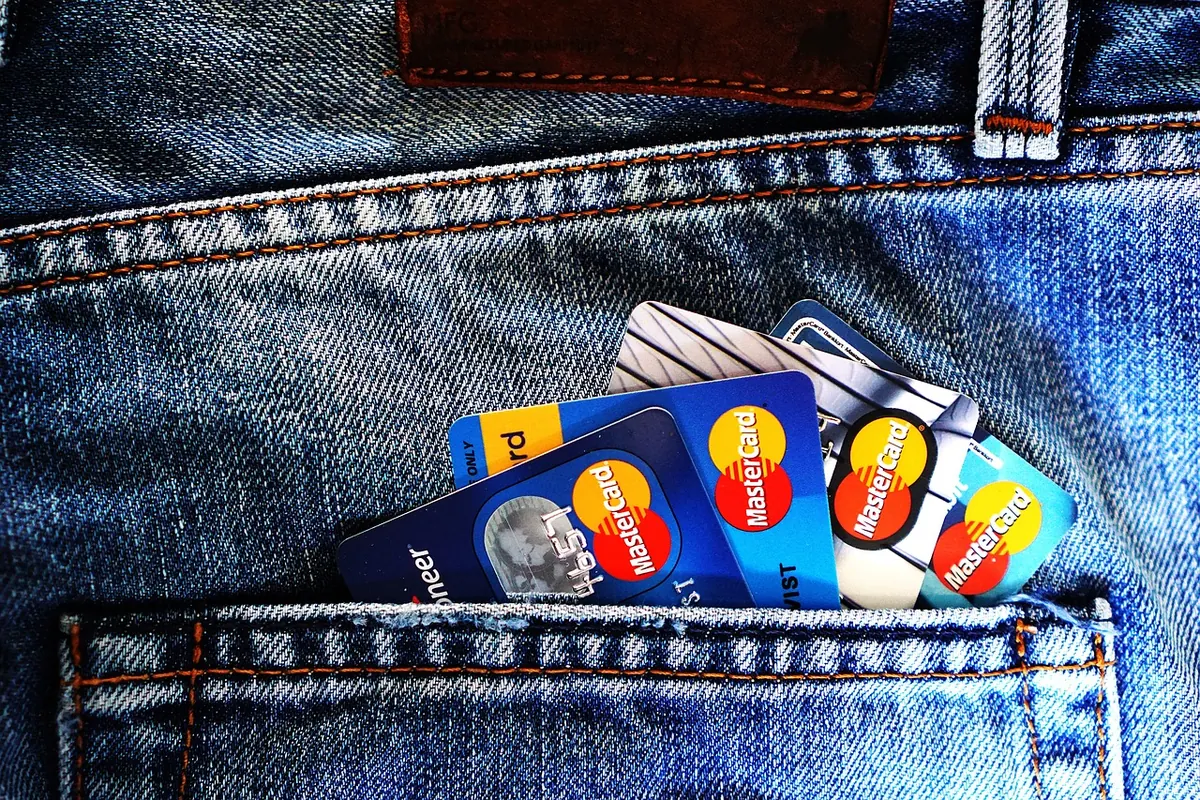
Photo: TheDigitalWay / Pixabay

5 Credit Score Myths That Are Quietly Costing You Money
Five persistent credit score beliefs — from fearing score checks to carrying balances — can cost you...

How to Read Your Credit Report Line by Line
A section-by-section walkthrough of your credit report, showing how to catch errors, spot accounts that...
About Us