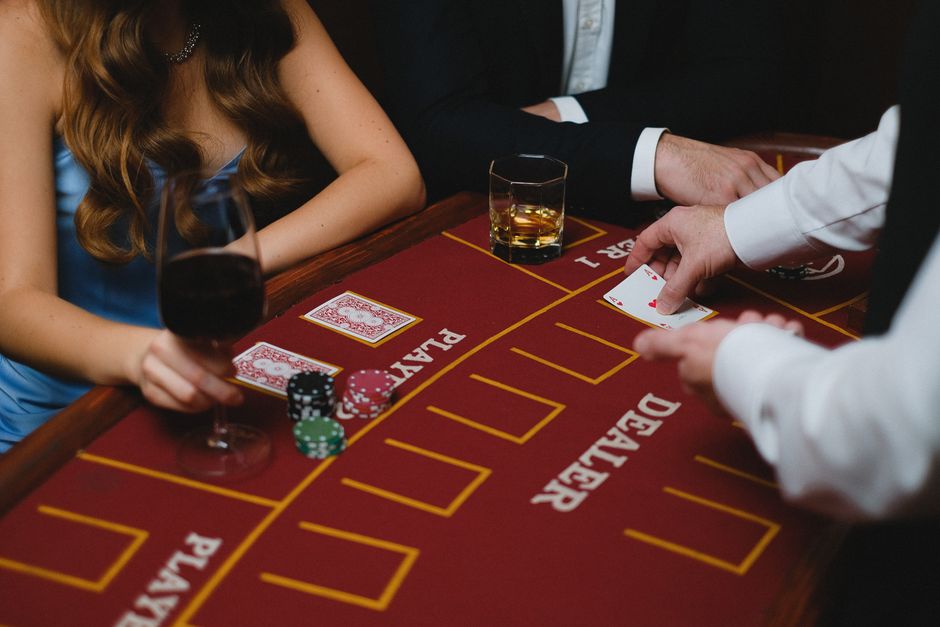
The Real Odds: What Casinos Don't Want You to Notice
There's a moment every gambler knows: the split second between placing a bet and the result, when the math hasn't caught up to your hope yet. That moment is the entire product. Everything else — the flashing slots, the felt tables, the free cocktails — is set dressing around a transaction engineered to extract value from you slowly enough that you keep coming back. Understanding that isn't cynicism. It's the first step toward actually enjoying iGaming without getting quietly bled dry.
Let's talk about how these games really work, where the myths come from, and which skills genuinely transfer across casino, slots, betting, and poker.
The House Edge Is Not a Scandal — It's the Business Model
Every game in a casino carries a built-in advantage for the operator. That's not a secret; it's published. Blackjack played with perfect basic strategy gives the house roughly a 0.5% edge. European roulette: 2.7%. American roulette: 5.26%, because of that extra double-zero pocket. Slot machines? Typically 2% to 15%, and you usually can't see the number unless the jurisdiction forces disclosure.
What catches people isn't the edge itself — it's how it compounds. A 2% edge on a single bet is trivial. A 2% edge sustained over 2,000 spins is a near-certainty that you walk away down. This is why serious players obsess over volume-adjusted expected value rather than any single outcome. A $100 blackjack session betting $5 hands is a completely different risk profile from a $100 slot session at $2 a spin. Same budget, wildly different expected decay.
The practical takeaway: if you're going to gamble, gamble slowly. Fewer, larger decisions with a lower edge beat constant small bets against a high one.
Slot Volatility: The Number Nobody Talks About
Two slots can share the same RTP — say 96% — and feel completely different. The difference is volatility, and it matters more than most players realize.
- Low volatility: frequent small wins, small losses, your bankroll drifts gently. Good for stretching session time.
- Medium volatility: the middle ground. Occasional solid hits, moderate droughts.
- High volatility: long dead spins punctuated by huge payouts. A 96% RTP high-volatility slot can eat 500 spins before a single meaningful win.
Here's a concrete example. Two players each sit with $200. Player A picks a low-volatility 96% slot and bets $0.50 a spin. Player B picks a high-volatility 96% slot and bets $2 a spin because "the jackpot is bigger." Player A gets maybe 400–600 spins of entertainment. Player B might get 40 spins and bust. Same RTP, completely different experiences. If you don't know the volatility before you start spinning, you're gambling on your own psychology, not the machine.
Poker Is the Only Game Where the Edge Can Be Yours
Poker sits in a different category entirely. You're not playing against the house — you're playing against other people, and the house just takes a rake. That means, theoretically, a skilled player can have a positive expected value long-term. Theoretically.
In practice, that only holds true for a small minority. Estimates vary, but at most stakes, somewhere between 5% and 15% of cash game players are genuinely profitable over a large sample. The rest either break even, pay rakeback indirectly through volume, or lose steadily to stronger opponents.
What separates the profitable slice isn't raw hand knowledge. It's discipline:
- Table selection. A killer player at a table full of stronger regulars is a losing player. Find soft games or don't play.
- Bankroll management. Twenty buy-ins minimum for cash games, 100+ for tournaments, is a common rule for a reason.
- Emotional control. Tilt destroys more bankrolls than bad beats ever have.
- Study, not just play. The players winning in 2024 are running solvers, reviewing hand histories, and treating it as a skill-building project.
If you're not willing to do those four things consistently, poker is harder to win at than blackjack, not easier. The romantic version of poker — intuition, guts, reading souls — is mostly marketing.
Sports Betting and the Illusion of Expertise
Sports betting feels different because you have knowledge. You watch football. You know the teams. Surely your edge is real? You can read more about it on slot deposit dana.
Sometimes it is, but the market is brutally efficient. Bookmakers and sharp bettors set lines based on an enormous amount of information. Your ability to correctly predict the winner of a game frequently already lives inside the odds. The question isn't "will the Chiefs win?" It's "are the Chiefs more likely to win than the implied probability of -180 suggests?" That's a much harder question.
The bettors who profit over years tend to have one of two things: access to information faster than the market, or a specific angle the market undervalues (line movement patterns, injury arbitrage, weather effects on totals). Casual intuition on mainstream markets loses to the vig. A 52.4% win rate is roughly what's needed to profit at standard -110 odds, and generating that sustained edge is genuinely difficult.
One habit that separates recreational from disciplined bettors: tracking every wager, including odds, stake, and reasoning, and reviewing months later. Most people are shocked by what their own records reveal about their "sure things."
Bankroll, Bonus, and the Fine Print Trap
Bonuses are the single most misunderstood part of iGaming. A "100% up to $500 welcome bonus" sounds great until you read the wagering requirements.
Here's a realistic example. You deposit $200 and get a $200 bonus. The bonus terms require you to wager the bonus + deposit total $400, thirty times over before withdrawing. That's $12,000 in total wagers. On a 96% RTP slot, expected loss on that volume is around $480 — making the "free" bonus a net loss for the average player. The bonus isn't free. It's a customer acquisition cost the operator has already priced into their expected return.
Bonuses can still be worth taking when the terms are soft: high RTP games, wagers counted one-to-one, low contribution weight on blackjack not being a problem. Always check three numbers before claiming any offer:
- The wagering multiplier (anything over 30x bonus is usually bad value).
- Maximum bet allowed while clearing (often $5 — violating this voids your winnings).
- Game weighting (slots often count 100%, blackjack as little as 10%).
The Only Real Skill Is Knowing When to Walk
Here's the uncomfortable truth that ties all of this together. iGaming is entertainment. The math is designed so that, over time, almost everyone is a net contributor to the operator's profit. The people who leave with more money than they arrived with are overwhelmingly those who got lucky on a small sample — not those with secret systems.
What separates a fun night from a destructive habit isn't the game you pick. It's the frame you bring to it: money you can afford to lose, a stop-loss you actually honor, and an honest awareness of what the edges look like. If blackjack, slots, poker, and betting all feel like the same thing after reading this, you've missed the point. Poker can reward discipline. Slots reward patience with your bankroll. Sports betting rewards information. And all of them punish anyone who refuses to do the math.
Enjoy the games for what they are. Just never forget which side of the table you're sitting on.

5 Credit Score Myths That Are Quietly Costing You Money
Five persistent credit score beliefs — from fearing score checks to carrying balances — can cost you...

How to Read Your Credit Report Line by Line
A section-by-section walkthrough of your credit report, showing how to catch errors, spot accounts that...